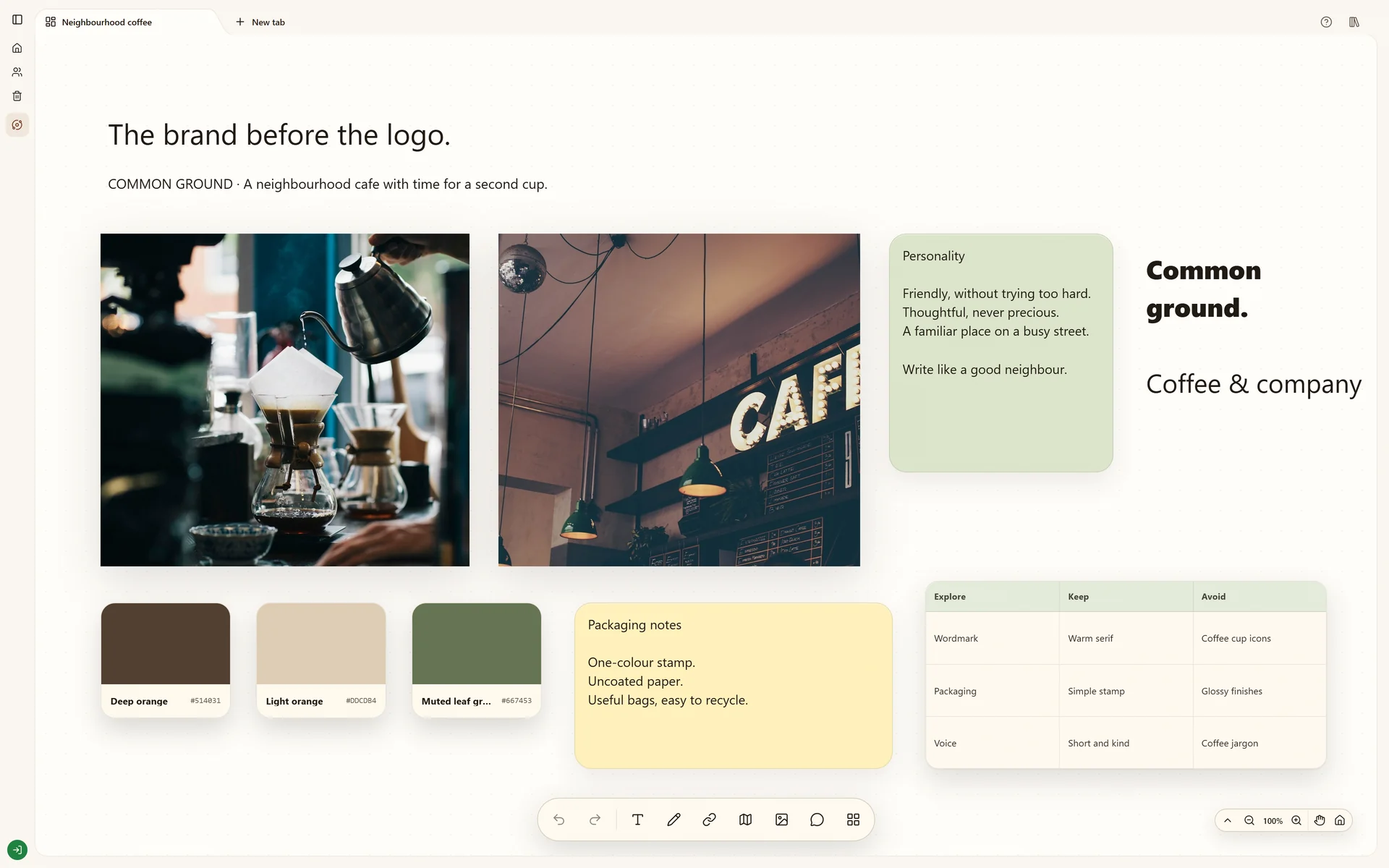
Build a brand moodboard with a clear brief, source links and a small set of visual directions. Use a Stashiro board to explain why each reference belongs.
Include the audience and intended feeling, a small set of references for color, typography and imagery, the original source links, and notes explaining your choices. A moodboard communicates a direction; it is not a finished brand identity or a license to reuse reference images.
Start with one sentence about who the brand serves and how it should feel. For a neighborhood coffee shop, a useful brief might be: a calm place for regulars, with warm materials and clear lettering. Add constraints such as an existing logo or a limited print budget. These make it easier to reject attractive references that do not fit.
Collect references with their sources
Paste source URLs onto the board and add your own images where you have permission. Keep a note beside each reference: warm lighting, compact lettering, or a welcoming entrance. The Chrome extension can save links into a cloud board's queue while you browse; place the relevant ones on the canvas when you review them.
Separate distinct directions
Group references into two or three directions rather than one crowded collage. A coffee brand might explore quiet and tactile, bold and playful, or classic and familiar. Use text labels and notes to describe the difference. Move items freely and connect a reference to the specific decision it supports.
Review the reasoning, then choose
Compare each direction against the same brief. On a cloud board, invite collaborators and use comments to identify what works and what needs clarification. Keep the chosen direction together and preserve useful alternatives on a sibling board in the same Space. Verify usage rights before turning any reference into a final asset.
Before you call it finished
One audience and intended feeling are written down.
Every important reference has a source and a reason.
The directions are visibly different.
The chosen direction answers the brief.
Reference image rights are checked before production.
Start with the tools you need
Try local boards without an account. They stay in this browser until you explicitly transfer them to your cloud account. Cloud storage, collaboration, desktop access, the Chrome extension, Telegram and connected AI tools require a paid Stashiro account.